
By Chris · Sep 27, 2026
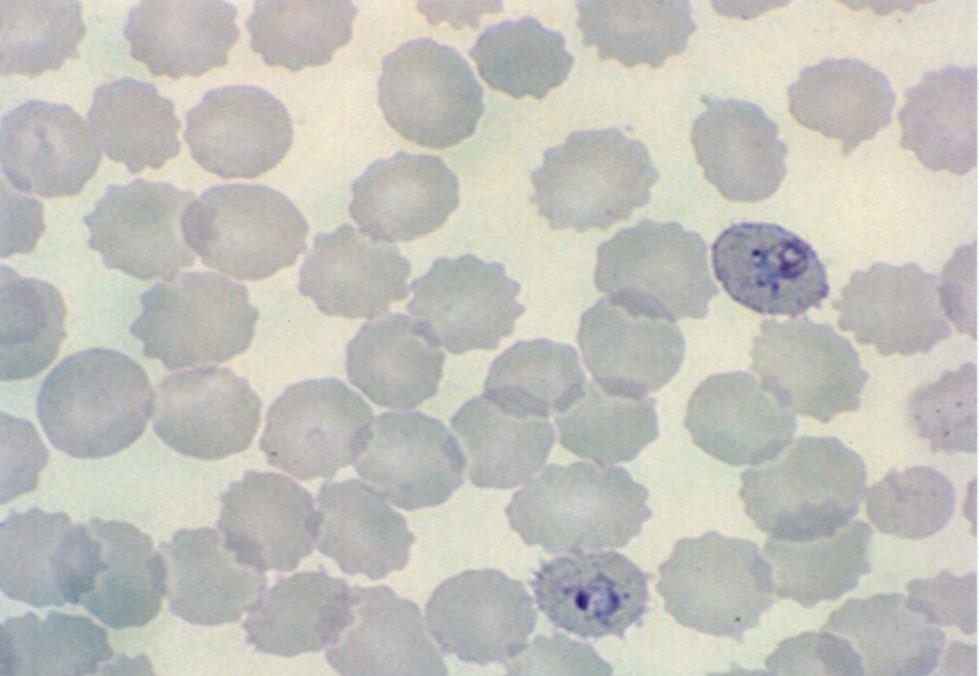
I started with a question about parasites.
Why, I kept noticing, do the people doing the riskiest things (BASE jumping, climbing without ropes, running solo through the backcountry) skew so heavily white? Comments under those videos always split the same way. Someone calls it a stereotype. Someone else says it’s not a stereotype, it’s a pattern, and asks why nobody wants to talk about it.
A friend of mine put it into words before I had. He’s Southeast Asian, originally from Canada like me, but he’s been living in the U.S. for a while now. He runs most days. I joked with him once about ICE picking him up on one of those runs. He didn’t miss a beat. “Unfortunately, the profile is they target brown people,” he said. He wasn’t worried for himself.
That answer sat with me longer than the joke did. It’s the thing that pulled everything else into focus: the extreme-sports comments, the joggers I mostly see out at dusk, the pattern nobody wants to name directly. Risk and exploration on one side, transgression on the other, and in the middle, whole populations trained from an early age to be risk-averse, because for them the cost of being seen as risky was never hypothetical.
That’s the pattern, right there. People who grow up expecting to be treated as suspicious learn early to manage how they move through public space. Jogging alone at night, flying a drone near a building, hanging off a cliff with a camera: those aren’t neutral acts for everyone. For some people they’re normal. For others they’re a decision, weighed against what could go wrong with a stranger, a cop, a border agent.
But that answer felt incomplete. It explained who avoids risk. It didn’t explain why some people run toward it so hard they’ll die for the feeling.
So I went looking for a biological answer. Specifically: Toxoplasma gondii, the parasite that lives in cats and, through them, in roughly a third of the world’s population. In rodents it does something close to mind control. It kills the fear response to cat urine, so infected mice wander toward the thing that eats them. There’s a real, published hypothesis that it does something milder but similar in people: nudges risk tolerance up, changes reaction time, thins out the instinct for self-preservation. Riskier driving. More traffic deaths. Higher rates of impulsive, dangerous behavior in infected populations. The mechanism is dopamine. The parasite appears to raise it in infected brain tissue, and dopamine is the chemical behind novelty-seeking.
For about an hour I thought I’d found something. A parasite explaining exploration, colonization, extreme sports, the whole reckless-white-guy-in-a-wingsuit phenomenon, in one clean biological stroke.
Then I checked where the parasite actually lives.
The highest infection rates in the world are in Africa and Latin America — the regions that got explored and colonized, not the ones doing the exploring. The lowest rates are in the UK and northern Europe, which somehow still produced the largest empire in recorded history. North America has some of the lowest Toxoplasma rates on the planet and also the highest number of skydivers, BASE jumpers, and backcountry accidents per capita. If the parasite is driving any of this, it’s driving it backwards.
So the biology doesn’t hold up. Whatever is actually happening, who gets to be reckless, who gets to explore, who gets to turn destruction into a personality, isn’t written into a parasite. It’s written into permission. Who gets stopped for the same behavior that gets someone else a sponsorship deal. Who gets shot for running and who gets a magazine cover for running off a cliff.
There’s a more grounded version of a selection effect, though: not biological, cultural. Going to sea in early modern Europe was considered one of the worst fates available to a working man. Short life expectancy, brutal discipline, disease, drowning, starvation rations. Most people avoided it if they had any other option. The ones who signed on were often the ones with nothing left to lose, or the ones already wired for risk: debtors, criminals, the restless, the desperate. Exploration wasn’t staffed by the average population of Europe. It was staffed by a self-selected subset already accustomed to danger, already willing to gamble their lives for a payout or an escape.
Pirates took that selection even further. For a lot of crews, transgression wasn’t a means to an end. It was the payment. Raiding, kidnapping, ransom, enslavement: that wasn’t a byproduct of the job, it was the business model. The men who signed onto those ships weren’t drawn to piracy despite the violence. Some of them were drawn to it because of the violence.
You can still see the shape of that mindset today. Talk to an offshore rig worker, the “rig pig” culture, and listen to how they describe the job. There’s real pride in the danger. The stories aren’t told as warnings, they’re told as credentials. That’s not a coincidence. It’s the same temperament that got recruited onto ships four hundred years ago, just relocated to a platform in open water. Different century, same appetite.
But the fact that I went looking for a parasite in the first place stuck with me. I wanted a biological name for something that felt, to me, like a sickness. It turns out I’m not the first person to reach for that word.
In my life I’ve had a lot of conversations, some of them arguments, about the difference between an Indigenous worldview and what I’d call the conquest mindset. Usually the argument starts because someone wants to frame it as savagery versus advancement, primitive versus modern. I don’t see it that way. To me it reads more like an ideological crisis than a technological gap.
I don’t subscribe to the idea that we lived in perfect harmony before European contact, either. We had our own issues and transgressions. But we didn’t load ships, cross oceans, and impose our systems on the rest of the world.
What I keep coming back to is health, not as an individual condition, but as balance. Balance between people, between people and animals, between people and land. Take more than you need, waste what you take, sever a relationship you depend on, and the imbalance shows up as illness. Not metaphorical illness. Actual sickness, understood as the direct consequence of living wrong.
By that measure, when Europeans arrived in the Americas, they didn’t look like conquerors to the people already living there. They looked sick. They cleared forests to build cities. They confined and multiplied animals at a scale nothing natural produces. They took far more than they used. From inside a worldview built on balance, that’s not ambition. That’s pathology.
And here’s the part that actually holds up under scrutiny, unlike the Toxoplasma theory: modern science says almost the same thing, just in different language. Roughly three-quarters of emerging infectious diseases come from animals. About half of the recent ones are tied directly to agricultural intensification: dense livestock, cleared habitat, humans and animals pressed into new contact. Industrial civilization doesn’t just risk disease. It manufactures the conditions disease needs.
So maybe the two ideas aren’t as far apart as they first looked. Not a virus riding in someone’s blood, making them cruel. Something slower and less containable: a way of living that produces sickness as a side effect, and behavior as a side effect of that. Extraction that justifies itself. Violence that gets to call itself progress because it happened at scale, with paperwork, in the name of something.
Which brings me back to the question that started all this: why does exploration always seem to end in destruction? Not conquest by design, necessarily. Just contact, expansion, extraction. Every frontier gets treated as material, and the people wired to reach it first are rarely the ones weighing the cost. If space is the next frontier, that question stops being rhetorical. What do we destroy next, once there’s nothing left to stop us?
I don’t think that adds up to a single answer. Historians already explain conquest through economics, ideology, technology, religion, greed. It probably doesn’t need a pathogen stacked on top. But I keep circling back to the question anyway, because it’s the one that started this: what if the sickness Indigenous observers saw wasn’t a metaphor? What if it was just correctly diagnosed, in a language nobody who arrived on those ships was willing to speak?
And what about now? The people who dominate extreme sports and viral adventure content are, disproportionately, the ones whose risk is socially cushioned: less likely to be stopped, questioned, or assumed dangerous for simply being in motion. Everyone else runs the same calculation my friend does when he talks about who gets targeted by immigration enforcement: where can I walk, dressed how, without it costing me something.
That’s not a parasite. That’s an inheritance. And centuries later, we’re all still living inside whatever it was that got passed down, measuring it, without meaning to, in who gets to run, who gets to jump, and who has to calculate the cost of movement before they take a single step.